Colour and material are not the first things that determine whether a vase suits a bouquet. Four other factors matter more: the opening should guide the stems, the height should work with the silhouette, the base should stand securely and the vase should support the bouquet visually.
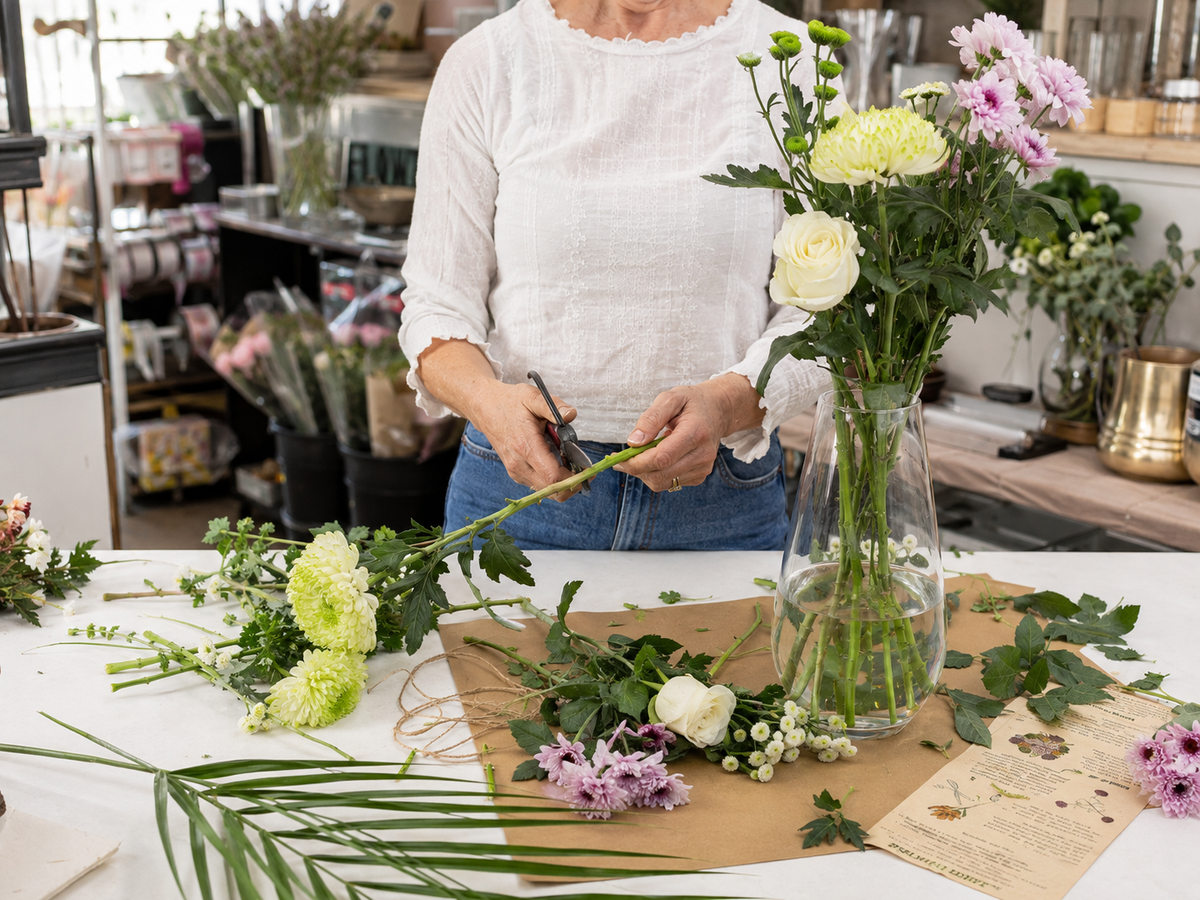
Start by placing the bouquet next to the vase instead of putting it straight in. This makes it easier to see whether the vessel is too tall, too delicate or too wide at the opening. You do not need a fixed numerical formula.
Four quick checks for the right vase
- Opening: Does the neck support the stems without squeezing the bouquet together?
- Height: Is enough of the bouquet visible above the rim without long stems looking unsupported?
- Stability: Does the filled vase stand securely, even when the bouquet is large or full at the top?
- Appearance: Does the vessel complement the flowers’ colours and shape, or does it draw attention away from them?
There is a practical reason for this order. A beautiful vase is not much help if its neck does not support the bouquet or its base feels unsteady under the weight. The vase has a supporting role here—albeit a rather important one.
The opening determines how freely the bouquet falls
A narrower neck gathers the stems and tends to hold them more upright. This works particularly well for a rounder, fuller bouquet that is meant to retain its compact shape. The neck should provide support, but not be so tight that the stems are crushed or have barely any room inside the vessel.
A wide opening gives the stems more space. A loose, spreading bouquet can open out beautifully in it. If the bouquet is too small for the opening, however, the stems slide far apart and the tied shape loses its presence. In that case, the bouquet is not too small; the opening is probably too generous.
The quickest test is to place the bouquet gently in the empty vase and let go without rearranging it. If its silhouette remains clear, the opening is working with the bouquet. If everything immediately falls outwards or the stems look wedged in, try another vessel.
How tall should a vase be for a bouquet?
The vase and the visible part of the bouquet should feel balanced as a whole. Long, upright stems often work with a taller vessel because it can give them more visual and practical support. A small bouquet with shorter stems, by contrast, can quickly disappear behind a high rim.
A rigid height formula does not account for different flower shapes. Heavy flower heads, curved branches and airy grasses each distribute their weight and lines differently. Look instead at the point just above the rim: does the bouquet visibly begin there, or does it seem as though only a few blooms are emerging from an oversized vessel?
Its eventual position matters too. On a dining table, the arrangement can stay lower if people need to talk across it. On a sideboard, a taller, more pronounced silhouette can work well. This is not a rule of floristry, just a simple test for the room where the bouquet will actually stand.
A stable base matters for large bouquets
The larger and more top-heavy a bouquet looks, the more important a vessel with some weight and a solid base becomes. A light, narrow vase may look elegant beside long stems, but it is not automatically stable enough for a lot of volume.
Test the vase with water in it, as this changes the vessel’s weight. Place it on a level surface and touch the bouquet only lightly. If the vessel wobbles noticeably or the bouquet extends far beyond the base, choose a heavier vase with a sturdier bottom. At this point, stability matters more than a particularly delicate silhouette.
Which vase shape suits which bouquet?
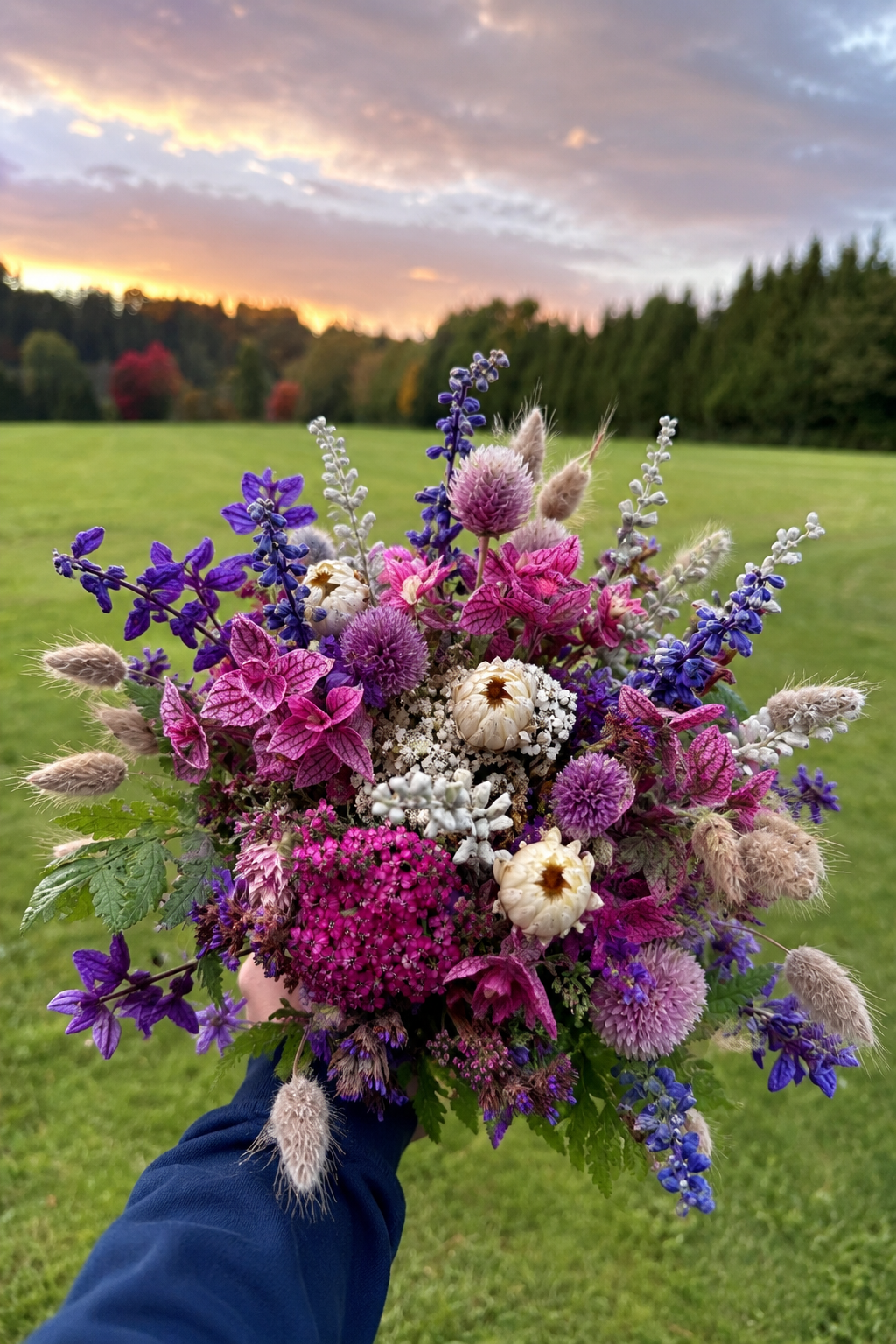
- Round, full bouquet: A rounded vase with a slightly narrower neck gathers the stems and supports a compact, rounded shape.
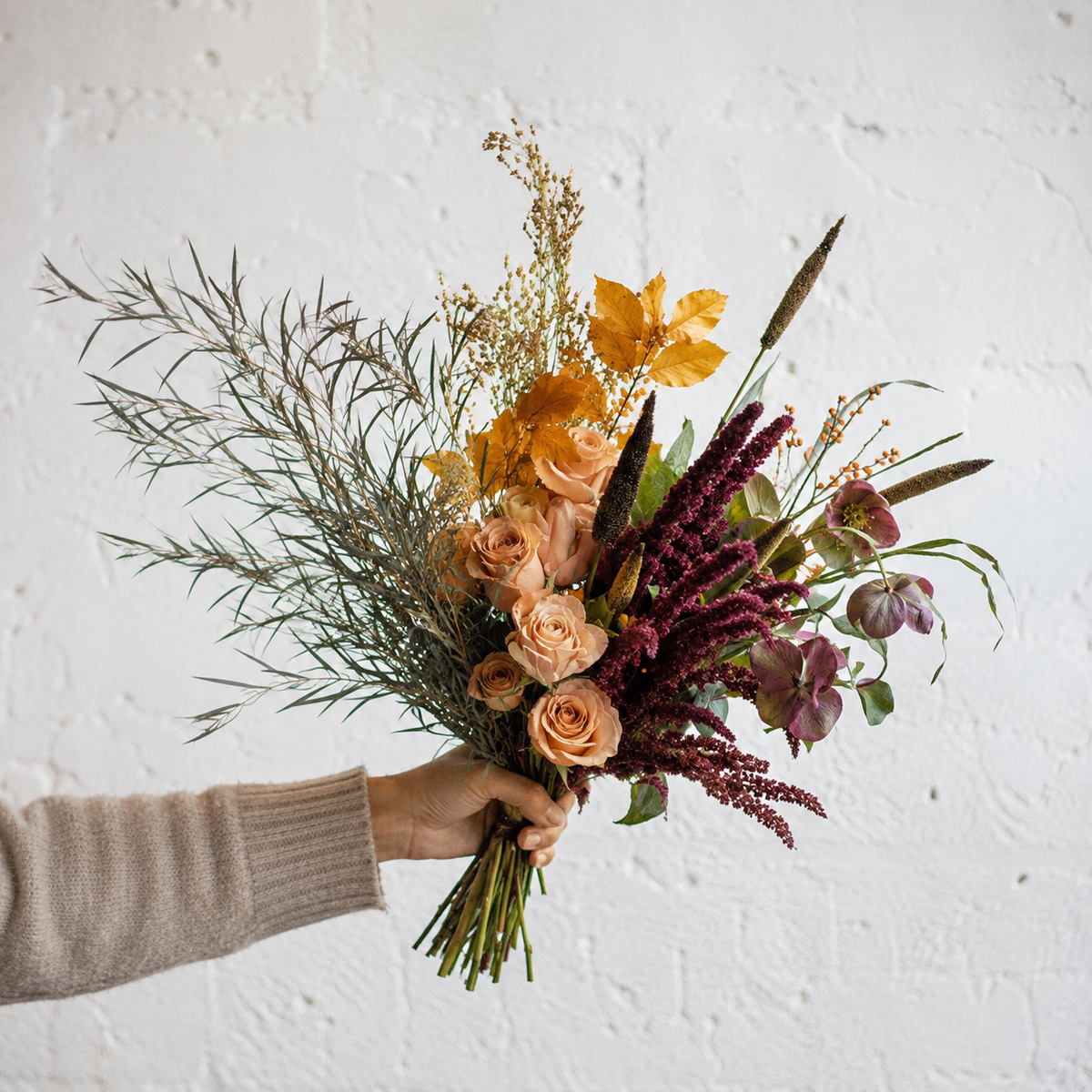
- Long, upright bouquet: A taller vase with a controlled opening follows the vertical line and supports long stems.
- Small bouquet with short stems: A smaller, lower vessel keeps the blooms visible instead of hiding them behind a high rim.
- Loose, spreading bouquet: A wider opening gives the lateral lines room—provided there are enough stems to carry the shape.
- Very large or heavy bouquet: A heavier vase with a wide base is usually the calmer choice.
These pairings are a guide, not a set of rules. An asymmetrical bouquet does not need to sit symmetrically in its vase, and a round bouquet does not require an equally round vessel. What matters is whether the vase and flowers look stable and intentional together.
Glass, ceramic or colour: what should take centre stage?
A transparent glass vase makes the stems and water a visible part of the overall picture. This can look light and direct, but it also puts everything below the blooms on display. An opaque vase made from ceramic or another material creates a calmer lower section and places a clearer surface alongside the flowers.
With an already colourful bouquet, an understated vessel can give the eye somewhere to rest. A coloured or patterned vase can play a deliberate part if it picks up a tone or line from the bouquet. It does not need to be an exact colour match. A visible relationship is often more interesting than a perfect set.
What if none of your vases is quite right?
If the vase you have is too wide, a smaller vessel may hold the shape better. If it is too low, see whether a taller vase gives the stems a more settled look before trimming them further. With a very large bouquet, finding a stable vessel is often more sensible than forcing it into a delicate favourite vase.
The final test happens in the right place
Put the filled vase where the bouquet will eventually stand, then take two steps back. Does the arrangement look secure? Are the flowers still the first thing you notice? Does the height suit the furniture and the room? If you can answer yes to all three, the vase is a good fit—even if it follows no supposedly perfect formula.